Huperzine A and Bacopa for Memory: What the Research Actually Shows
Quick Answer: Do Nootropic Herbs Help Memory?
To a modest, real extent for the right person. Meta-analyses find that standardised Bacopa monnieri improves aspects of memory and recall in healthy adults, though the effect emerges over 8 to 12 weeks, not overnight. Huperzine A has clear cholinergic activity but a less settled long-term benefit in healthy people, and Ginkgo biloba has a large but mixed literature for cerebral blood flow and age-related memory. None of them treats dementia, and none works in a single afternoon.
- Strongest finding: Bacopa improves recall in healthy adults over weeks of use.
- Fast but unsettled: Huperzine A affects acetylcholine; usually cycled.
- Key caveat: everyday support, not a cure — see a clinician for real memory loss.

Why Bacopa is the best-evidenced of the group
Bacopa monnieri is a staple of traditional Ayurvedic practice for memory, and unusually for a herbal nootropic it has been put through a series of randomised, placebo-controlled trials. A widely cited 2014 meta-analysis in the Journal of Ethnopharmacology pooled those trials and concluded that standardised Bacopa can improve aspects of memory, particularly the speed of recall, in healthy adults. The consistent theme is time: the benefit shows up after roughly 8 to 12 weeks of daily use, not in the first week. Anyone selling a Bacopa product as an instant boost is misreading its own evidence.
The mechanism most often proposed is a combination of antioxidant activity in the hippocampus and an effect on cholinergic signalling, though the honest position is that nobody has pinned it down definitively in humans. What matters practically is standardisation. Trials use extracts standardised to a stated bacoside content, and the trial dose is typically 300 mg a day of such an extract. A product that lists raw leaf powder with no bacoside figure is not the thing that was tested, however impressive the milligram number on the front looks. Our bacopa dosage and bacosides guide works through what a defensible panel entry looks like.
Huperzine A: fast-acting, but handle with care
Huperzine A is a compound from the club moss Huperzia serrata. Mechanistically it is the most drug-like ingredient in a typical nootropic stack: it inhibits acetylcholinesterase, the enzyme that clears acetylcholine, so more of that memory-linked neurotransmitter stays available. That is the same broad mechanism used by several prescription drugs for cognitive decline, which is precisely why it deserves more caution than a herbal tea ingredient, not less. If you want the underlying biology, we cover how acetylcholine supports memory separately.
The dose scale is the first thing to notice. Research uses micrograms — commonly 50 to 200 mcg once or twice daily — not milligrams. That is a thousand-fold difference from most botanical entries on a panel, and it means a mislabelled or badly formulated product has far less room for error. It is also why huperzine is usually cycled rather than taken continuously: sustained acetylcholinesterase inhibition is a pharmacological state, not a nutritional one.
What the evidence supports, and what it does not
What it supports. Huperzine A does what its mechanism says it does. A 2013 systematic review and meta-analysis in PLoS One pooled randomised trials in Alzheimer's disease and found improvements on cognitive scales, while noting that the included studies were generally of low methodological quality. That is a real signal reported with a real caveat, and both halves belong in any honest summary.
What it does not support. The evidence for milder, everyday use is thinner than the marketing suggests. A Cochrane review of Huperzine A for mild cognitive impairment concluded there was insufficient evidence to support its use, on the basis that no trial met the review's inclusion criteria. There is no body of long-term randomised evidence at all for healthy adults taking huperzine to study or work better, which is the use most supplement copy implies.

Ginkgo and Lion's Mane: the supporting cast
Ginkgo biloba has the largest literature of any botanical here and the most disappointing headline result. The Ginkgo Evaluation of Memory study, published in JAMA in 2008, followed more than three thousand older adults for years and found that ginkgo did not reduce the incidence of dementia. Smaller studies still report effects on cerebral blood flow and some age-related memory measures, so the picture is mixed rather than empty — but a large, well-run prevention trial returning null is the kind of result that should temper expectations. We go through it in detail in our ginkgo biloba and memory evidence review.
Lion's Mane (Hericium erinaceus) sits at the opposite end: an appealing mechanism with very little human data. It is studied for compounds that stimulate nerve growth factor pathways, and a small Japanese double-blind trial in adults with mild cognitive impairment reported improvement on a cognitive scale during supplementation, with the benefit fading after the intervention stopped. One small trial is a reason to keep watching, not a reason to claim a proven effect. The lion's mane and nerve growth factor piece looks at what the mushroom literature can and cannot carry.
The four ingredients side by side
| Ingredient | Typical research dose | What the research supports |
|---|---|---|
| Bacopa monnieri | 300 mg/day standardised extract | Improved recall in healthy adults over 8–12 weeks (meta-analysis) |
| Ginkgo biloba | 120–240 mg/day standardised extract | Mixed; a large prevention trial found no dementia benefit |
| Huperzine A | 50–200 mcg/day | Clear cholinergic activity; low-quality trial base, thin for healthy adults |
| Lion's Mane | 3 g/day in the main trial | Promising early human data; few, small, short studies |
Where the evidence stops
Three honest limitations are worth stating plainly. First, a finished multi-ingredient supplement is not the same as any single studied dose — the ingredients can have evidence while the specific product has never been trialled. Always check a label's amounts against what the studies actually used, a habit our memory supplement label guide turns into a short checklist.
Second, effect sizes here are small. Even Bacopa, the best-supported ingredient in the group, produces a measurable but modest change on recall tests over months. That is worth something; it is not a different brain. Anyone promising a dramatic transformation is describing a product that has not been tested, or has been tested and did not deliver.
Third, none of this treats a disease. If you or a family member has genuine, progressing memory loss, that is a medical situation, and a nootropic is not the answer — a clinician is. The trials in diagnosed populations exist to answer medical questions, not to license supplement marketing.
Common mistakes when buying these ingredients
- Ignoring standardisation. "Bacopa 500 mg" without a bacoside percentage is not comparable to the 300 mg standardised extract used in trials.
- Confusing mcg and mg. Huperzine A is dosed in micrograms; a milligram figure would be far outside the research range.
- Expecting week-one results. Bacopa is an 8-to-12-week ingredient, which is why how long nootropics take to work is the question worth asking before you buy.
- Assuming a stack equals its parts. Four half-doses of four studied ingredients is not four studied ingredients.
- Skipping the interaction check. Huperzine A and ginkgo both have plausible drug interactions; the nootropic side effects and safety guide covers what to raise with a prescriber.
A note on HoneyPezil itself
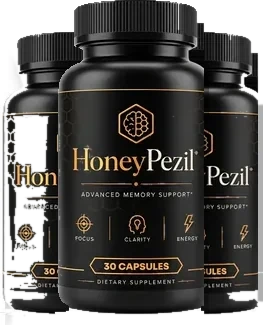
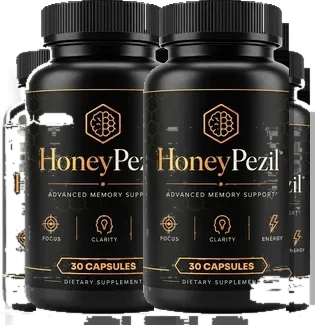
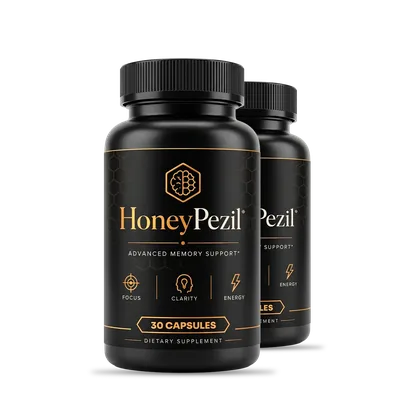
Because this article keeps coming up alongside searches for HoneyPezil, one clarification is worth making directly. A great deal of writing about HoneyPezil describes it as a botanical nootropic stack built on Huperzine A, Bacopa, Ginkgo and Lion's Mane. Its Supplement Facts panel lists none of them. What the panel actually shows is an amino-acid formula — L-arginine, L-arginine AKG, L-citrulline HCl, L-citrulline malate, beta-alanine, niacin and calcium — which works a completely different pathway, described in our piece on citrulline, arginine and brain blood flow. If the botanicals above are what you are shopping for, this is not the product that contains them, and we would rather say so than let the confusion stand.
Medical note: this article is general information, not medical advice. Speak to a healthcare professional before starting any supplement, especially if you are pregnant, nursing, or taking medication — Huperzine A and Ginkgo in particular can interact with drugs.
Frequently asked questions
Does Bacopa monnieri actually improve memory?
Modestly, and slowly. Meta-analyses of randomised controlled trials find that standardised Bacopa monnieri can improve aspects of memory and recall in healthy adults, with the effect typically emerging after 8 to 12 weeks of daily use rather than immediately. It is a gradual nudge, not a dramatic boost.
What does Huperzine A do?
Huperzine A, from the club moss Huperzia serrata, inhibits the enzyme that breaks down acetylcholine, a neurotransmitter central to learning and memory. That gives it measurable cholinergic activity, but its long-term benefit in healthy people is less settled, which is why it is usually cycled rather than taken continuously.
What dose of Huperzine A is used in research?
Clinical studies typically use 50 to 200 micrograms once or twice a day, which is a microgram-scale dose rather than a milligram one. Because it is potent at those amounts, a label listing huperzine should be read carefully, and the difference between micrograms and milligrams matters more here than almost anywhere else on the supplement shelf.
Is Lion's Mane proven for the brain?
Not yet. Lion's Mane (Hericium erinaceus) is studied for nerve-growth-factor pathways and has promising early human data, including a small Japanese trial in adults with mild cognitive impairment, but the trials are few, small and short. Treat it as a promising supporting ingredient rather than a proven one.
Does HoneyPezil contain Huperzine A or Bacopa?
No. A good deal of writing about HoneyPezil describes it as a botanical stack built on Huperzine A and Bacopa, but neither appears on its Supplement Facts panel. The panel lists L-arginine, L-arginine AKG, L-citrulline HCl, L-citrulline malate, beta-alanine, niacin and calcium. If those botanicals are what you want, this is not the product that contains them.
Can a nootropic supplement treat dementia?
No. Dementia and Alzheimer's disease are medical conditions that require diagnosis and care. Nootropic botanicals are studied for everyday memory and focus in healthy adults, not for treating disease. If you have genuine, progressing memory loss, see a clinician.
Scientific references
- Kongkeaw C. et al. — Meta-analysis of randomized controlled trials on cognitive effects of Bacopa monnieri extract, J Ethnopharmacol (2014)
- Yang G. et al. — Huperzine A for Alzheimer's disease: a systematic review and meta-analysis of randomized clinical trials, PLoS One (2013)
- Yue J. et al. — Huperzine A for mild cognitive impairment, Cochrane Database of Systematic Reviews (2012)
- DeKosky S.T. et al. — Ginkgo biloba for prevention of dementia: a randomized controlled trial, JAMA (2008)
- Mori K. et al. — Improving effects of the mushroom Yamabushitake (Hericium erinaceus) on mild cognitive impairment, Phytother Res (2009)
- NIH NCCIH — Ginkgo: What You Need To Know
Related reading
Check the panel before you believe the story
Despite what a lot of writing about HoneyPezil claims, its Supplement Facts panel lists no huperzine A and no bacopa — it is an amino-acid blood-flow formula.