Acetylcholine and Memory: How the Brain Learns
How does acetylcholine affect memory?
Acetylcholine is the neurotransmitter most tied to attention and to encoding new memories. It helps the brain lock in what you focus on. Choline nootropics such as citicoline and alpha-GPC supply the building block for acetylcholine, while compounds like huperzine A slow its breakdown, so more stays available at the synapse.
- The role: acetylcholine drives attention and memory encoding.
- The supply: citicoline and alpha-GPC provide the choline it is made from.
- The preservation: huperzine A slows the enzyme that clears it.
The neurotransmitter behind learning
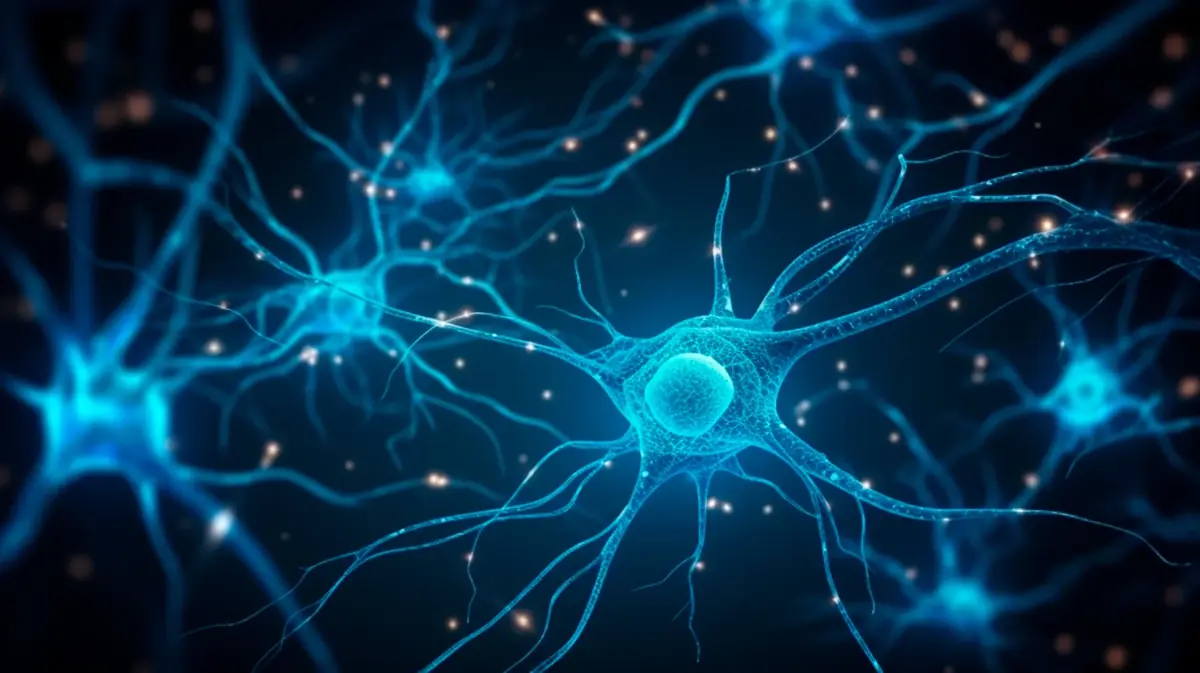
Of the dozens of chemical messengers in the brain, a handful get most of the attention: dopamine for motivation and reward, serotonin for mood, GABA for calm. Acetylcholine is less famous but is arguably the one most directly involved in the everyday act of learning. It was, in fact, the first neurotransmitter ever identified, and more than a century of research has placed it at the centre of how the brain pays attention and files away new information.
When neuroscientists talk about the cholinergic system, they mean the network of neurons that release and respond to acetylcholine. This system projects widely into the hippocampus and the cortex, the two regions most involved in forming and storing memories. When that signalling is strong, attention sharpens and the brain is more receptive to encoding what is in front of it. When it fades, attention wanders and new memories form more slowly. That basic relationship is why acetylcholine keeps coming up in any serious discussion of memory supplements.
How a memory actually gets written
Forming a memory is not a single event but a chain. First you have to attend to something; unattended information mostly evaporates. Acetylcholine helps set the brain's gain for attention, effectively turning up the signal for whatever you are concentrating on. Then that attended experience has to be encoded, which involves strengthening the connections between specific neurons. Cholinergic activity in the hippocampus supports this encoding phase, biasing the network toward laying down new information rather than replaying old patterns.
This is why the practical advice about learning and the biology of acetylcholine line up so neatly. Focus, minimal distraction, and genuine engagement all raise the odds that a memory sticks, and all of them lean on the same attention machinery that acetylcholine drives. No supplement replaces that. What choline-based nootropics aim to do is make sure the raw materials and signalling for that machinery are not the bottleneck.
Choline: the building block
Acetylcholine is built from two ingredients: acetyl groups, which the body has in plentiful supply, and choline, an essential nutrient you largely have to get from your diet. Choline is the rate-limiting piece. If choline is scarce, the brain has less to work with when it needs to manufacture acetylcholine. This is the simple logic behind choline supplementation: give the body more of the building block and you support its capacity to make the neurotransmitter.

Citicoline and alpha-GPC
Two choline sources dominate the nootropic world. Citicoline (CDP-choline) delivers choline plus cytidine, which the body converts to uridine, and it has some of the more encouraging human data for attention and mental energy. Alpha-GPC (alpha-glycerophosphocholine) is a highly bioavailable choline source that crosses into the brain efficiently and is popular for the same reason. Both aim at the same goal from slightly different angles: keep the brain well supplied with the precursor to acetylcholine. Which one suits you is partly individual, and we cover that comparison in a dedicated guide linked below.
Huperzine A: slowing the breakdown
Supplying choline is one half of the picture. The other half is preservation. After acetylcholine does its job at the synapse, an enzyme called acetylcholinesterase quickly breaks it down so the signal does not linger indefinitely. Huperzine A, a compound from the club moss Huperzia serrata, inhibits that enzyme. The result is that acetylcholine hangs around a little longer, which is a genuinely different mechanism from simply adding more building block. It is also the most drug-like ingredient in a typical stack, which is exactly why it is usually cycled rather than taken continuously.
Two mechanisms, side by side
| Approach | Example | What it does |
|---|---|---|
| Supply the precursor | Citicoline, alpha-GPC | Provides choline to make acetylcholine |
| Slow the breakdown | Huperzine A | Inhibits the enzyme that clears acetylcholine |
| Feed it from food | Eggs, liver, fish | Dietary choline as a baseline supply |
Why choline matters in a stack
Understanding these two mechanisms explains why so many memory formulas pair a choline source with a breakdown-slowing compound. On its own, huperzine A makes more of your existing acetylcholine available, but if the underlying supply of choline is thin, there is a ceiling on how much benefit that offers. Add citicoline or alpha-GPC and you are topping up the raw material at the same time as slowing its clearance. The two moves are complementary rather than redundant, which is the reasoning behind their frequent appearance together.
It is worth keeping expectations grounded, though. A well-designed stack supports the cholinergic system; it does not override biology. The effect for a healthy, well-nourished person is a nudge, not a transformation, and much of the everyday variation in your memory comes down to sleep, stress and attention rather than any single nutrient. The choline story is real and mechanistically clean, but it is one lever among several.
Can you overdo it?
Yes, and this is where honest dosing matters. Pushing cholinergic activity too hard can produce headaches, nausea, excess salivation, muscle tension or a flat, low mood in sensitive people. These effects are more associated with breakdown-slowing compounds like huperzine A than with dietary choline, because inhibiting the clearing enzyme is a more forceful intervention than adding building block. More is not better here. Sensible amounts, and cycling potent ingredients rather than taking them indefinitely, are the reasonable defaults.
Food first
Before any capsule, it is worth remembering that food supplies choline too. Egg yolks are among the richest sources, along with liver and other organ meats, beef, fish, chicken, soybeans and cruciferous vegetables. Many people do not hit the recommended intake from diet alone, which is part of why supplemental choline has a rationale, but a varied diet still provides a meaningful baseline. Supplements are best understood as a concentrated top-up on that foundation, not a replacement for it.
Medical note: this article is general information, not medical advice. Speak to a healthcare professional before starting any supplement, especially if you are pregnant, nursing, or taking medication — huperzine A in particular can interact with drugs that act on the cholinergic system.
Frequently asked questions
What does acetylcholine do for memory?
Acetylcholine is the neurotransmitter most tied to attention and to encoding new memories. When you focus on something and lock it into memory, cholinergic signalling in the hippocampus and cortex is doing much of that work. Low acetylcholine activity is associated with poorer attention and slower learning, which is why the system is central to memory research.
How do nootropics raise acetylcholine?
Two ways. Choline sources like citicoline and alpha-GPC supply the raw building block your brain uses to make acetylcholine. Separately, compounds such as huperzine A slow the enzyme that breaks acetylcholine down, so more of it stays available at the synapse. Many stacks combine a supply ingredient with a breakdown-slowing ingredient.
Can you have too much acetylcholine?
Yes. Pushing cholinergic activity too hard can cause headaches, nausea, excess salivation, muscle tension or low mood in sensitive people. This is more of a risk with breakdown-slowing compounds like huperzine A than with dietary choline. It is one reason huperzine A is usually cycled and why sensible dosing matters.
Which foods boost acetylcholine naturally?
Choline-rich foods give your body the building block for acetylcholine. Egg yolks are among the richest sources, along with liver and other organ meats, beef, fish, chicken, soybeans and cruciferous vegetables. For most people a varied diet supplies a useful baseline, and supplements are simply a more concentrated top-up. In the Framingham Offspring Cohort, higher habitual dietary choline intake was associated with better verbal memory and with less white-matter hyperintensity volume — an observational association, not proof that eating more choline improves memory.
Scientific references
- NIH Office of Dietary Supplements — Choline fact sheet
- Purves D. et al. — Acetylcholine, in Neuroscience (NCBI Bookshelf)
- Synoradzki K, Grieb P — Citicoline: A Superior Form of Choline? Nutrients (2019)
- NIH NCCIH — Dietary and Herbal Supplements
- NIH Office of Dietary Supplements — ingredient fact sheets
- Poly C. et al. — The relation of dietary choline to cognitive performance and white-matter hyperintensity in the Framingham Offspring Cohort, Am J Clin Nutr (2011)
Related reading
See what HoneyPezil actually contains
HoneyPezil is not a choline formula — it is 400 mg of arginine, 200 mg of citrulline, beta-alanine, niacin and calcium per capsule, with every amount printed on the panel.