Ginkgo Biloba for Memory and Blood Flow: The Evidence
Quick Answer: Does Ginkgo Biloba Improve Memory?
Sometimes, and modestly. Ginkgo biloba, taken as a standardised EGb 761-style extract at 120 to 240 mg daily, is studied for supporting memory partly through cerebral blood flow and antioxidant activity. Trial results are genuinely mixed, and it needs four to six weeks of consistent use. It does not treat dementia.
- Standardised dose: 120–240 mg/day of an EGb 761-style leaf extract.
- Proposed mechanism: cerebral blood flow plus antioxidant support.
- Reality check: mixed trials, weeks to judge, no dementia claim.
The oldest name in "brain circulation" supplements
Ginkgo biloba is one of the most recognisable ingredients in the entire brain-health aisle, and it has been used medicinally for centuries. The plant itself is a living fossil, a tree species that has barely changed in millions of years, and the supplement is made from a concentrated extract of its leaves. For decades it has been marketed on a simple, intuitive story: better circulation to the brain should mean sharper thinking. That story is appealing, but the research behind it is more nuanced than the marketing suggests, which is exactly why it deserves a careful look.
What makes ginkgo interesting is that it is not fringe. It has been studied in large, well-funded trials, including some designed specifically to test whether it could slow cognitive decline in older adults. That means we have unusually good data for a botanical, and the picture that emerges is a useful lesson in reading evidence honestly rather than cherry-picking the flattering studies.
What ginkgo actually does in the body
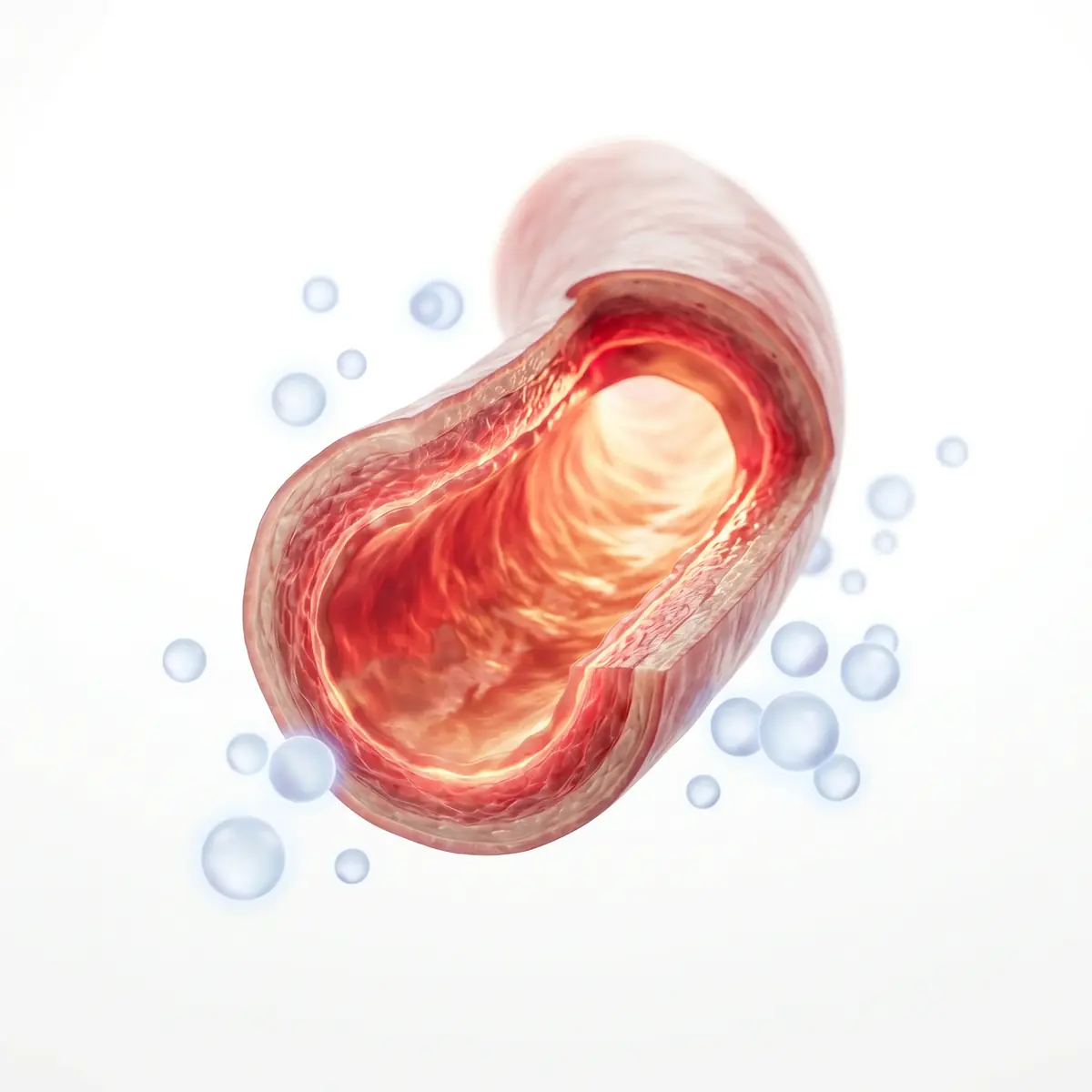
Two mechanisms are usually credited for ginkgo's effects. The first is circulation: ginkgo appears to improve blood flow, including to the small vessels of the brain, partly by acting on platelets and blood vessel tone — a different route to the same endpoint as the amino acids that feed the nitric oxide pathway behind cerebral blood flow. The second is antioxidant activity, driven by the flavonoids in the extract, which may help protect cells from oxidative stress. Both mechanisms are biologically plausible and are supported by laboratory work, which is why ginkgo has stayed relevant for so long.
The important gap is the one between "plausible mechanism" and "measurable benefit in real people." A supplement can genuinely change blood flow in a lab measurement and still fail to produce a noticeable improvement in memory when tested properly. Holding those two ideas apart is the key to understanding ginkgo, because its mechanisms are stronger than its clinical track record.

What the trials really found
Here is where honesty matters. Some randomised trials of standardised ginkgo, particularly in older adults and in people with existing cognitive complaints, have reported small improvements in memory, attention and quality of life. On the strength of those studies, ginkgo built its reputation. But the largest and most rigorous trials tell a more sobering story. The big prevention studies, which followed thousands of older adults for years, generally found that ginkgo did not prevent cognitive decline or reduce the risk of dementia compared with placebo.
So which is true? Both, in a sense. The fair reading is that ginkgo may offer a modest, real benefit for some individuals, especially where circulation or age-related changes are part of the picture, while offering little for others and doing nothing to prevent serious cognitive disease. That is an unglamorous conclusion, but it is the accurate one, and it is far more useful than a headline claim in either direction.
Ginkgo at a glance
| Question | Honest answer |
|---|---|
| Standardised dose | 120–240 mg/day of an EGb 761-style extract, split across the day |
| Time to judge | 4–6 weeks or more of consistent use |
| Best-supported use | Modest support for memory and attention in some older adults |
| Not supported | Preventing dementia or reversing cognitive decline |
| Main caution | Mild blood-thinning effect; interacts with anticoagulants |
Dose, standardisation and patience
If you are going to try ginkgo, do it the way the research does. That means a standardised extract, often described as EGb 761-style, delivering roughly 24% flavone glycosides and 6% terpene lactones, at a daily dose of 120 to 240 mg, usually split into two or three servings. As with most botanicals, the standardisation is the number that matters; a huge milligram figure of unstandardised leaf powder tells you very little about potency.
Patience is the other requirement. Ginkgo is not a stimulant and produces nothing you would feel in an afternoon. The trials that reported benefits ran for weeks to months, so a fair personal test is at least four to six weeks of consistent daily use. If you take it for three days, feel nothing and conclude it does not work, you have not actually tested it the way the studies did.
Product quality is a quieter but real issue. Independent testing has repeatedly found that some ginkgo supplements on the market contain less of the standardised compounds than the label claims, or are diluted with cheaper related plant material. That variability is one plausible reason results differ so much from person to person and study to study. If you buy ginkgo, favour products that state a specific standardised extract and, ideally, carry third-party testing, rather than a vague "ginkgo leaf" figure on the front of the pack. In a multi-ingredient formula, the same rule applies: check that the label names the extract and its standardisation, not just the herb.
The blood-thinning caution that matters
Ginkgo's one genuinely important safety issue follows directly from its mechanism. Because it can reduce platelet stickiness, it has a mild blood-thinning effect. For most healthy people this is not a problem, but it becomes one if you combine ginkgo with anticoagulant or antiplatelet medication such as warfarin or aspirin, or if you have a bleeding disorder. It is also commonly stopped a couple of weeks before surgery for the same reason. Beyond that, side effects are usually mild, such as headache or stomach upset, but the bleeding interaction is the one to take seriously.
And, as always, the boundary line: ginkgo is studied for everyday memory and age-related changes in healthy adults. It is not a treatment for dementia or Alzheimer's disease, and the strongest evidence specifically failed to show it prevents those conditions. Genuine, progressing memory loss is a medical matter for a clinician, not a supplement decision.
Medical note: this article is general information, not medical advice. Ginkgo can interact with blood thinners and should usually be paused before surgery. Speak to a healthcare professional before starting it, especially if you take medication, have a bleeding disorder, are pregnant or are nursing.
Frequently asked questions
Does ginkgo biloba actually improve memory?
The evidence is genuinely mixed. Some trials of standardised ginkgo extract report small improvements in memory and attention, particularly in older adults, while large well-run studies have found little or no benefit for preventing cognitive decline. The fair summary is that ginkgo may offer a modest boost for some people, but it is not a reliable memory enhancer and it does not work for everyone.
How much ginkgo should I take daily?
Most research uses a standardised leaf extract, often described as EGb 761-style, at 120 to 240 mg per day, usually split into two or three doses. That standardisation, typically around 24% flavone glycosides and 6% terpene lactones, matters far more than the raw milligram weight of plain ginkgo powder. Stay within the label's stated amount rather than assuming more is better.
How long does ginkgo take to work?
Give it time. Ginkgo is not a same-day stimulant, and the trials that report cognitive effects generally run for four to six weeks or longer of consistent daily use. If you take it for a few days and feel nothing, that is expected. Judge it after a month or two of steady use, not after a single dose.
Can ginkgo thin the blood?
It can have a mild blood-thinning effect. Ginkgo may reduce platelet stickiness, which is why it is often stopped before surgery and why combining it with anticoagulant or antiplatelet drugs such as warfarin or aspirin can raise bleeding risk. If you take blood thinners or have a bleeding disorder, talk to a doctor before using ginkgo.
Scientific references
- NIH NCCIH — Ginkgo: What You Need To Know
- DeKosky S.T. et al. — Ginkgo biloba for prevention of dementia: a randomized controlled trial (the GEM study), JAMA (2008)
- Cochrane Library — reviews of Ginkgo biloba for cognitive impairment
- NIH Office of Dietary Supplements — ingredient fact sheets
- NIH NCCIH — Dietary and Herbal Supplements
Related reading
Blood flow without the botanical guesswork
HoneyPezil contains no ginkgo. It targets circulation through arginine and citrulline instead — 400 mg and 200 mg respectively, both printed on the label.