How to Choose a Memory Supplement: Read the Label
Quick Answer: How Do You Choose a Memory Supplement?
Ignore the marketing and read the Supplement Facts panel. Look for named, standardised ingredients (like Bacopa standardised to 50% bacosides) at doses matching published human trials, avoid proprietary blends that hide amounts, and favour brands with third-party testing. Realistic labels promise support over weeks, not overnight genius.
- Standardisation: a named active compound at a stated percentage, not just a plant name.
- Clinical dose: milligrams that match what the studies actually used.
- Verification: third-party testing and a GMP-registered facility.
Walk down any supplement aisle, or scroll any storefront, and the memory category looks identical: glowing brains, words like "advanced" and "clinical", and promises of laser focus. None of that is regulated in the way you might assume. In the United States, dietary supplements are treated as food, not medicine, so a brand does not have to prove a product works before selling it. What it does have to do is print an honest Supplement Facts panel. That panel is where the marketing ends and the facts begin, and learning to read it is the single most useful skill a supplement shopper can build.
This guide walks through exactly what to check, in order, so you can tell a genuinely well-formulated memory supplement from a good-looking bottle of underdosed filler. None of this is about any single product treating a condition — it is about spending your money on formulas that at least match the research they borrow their credibility from.
Start with the Supplement Facts panel, not the front of the box
The front of the box is advertising. The back is disclosure. Flip the bottle over and find the Supplement Facts panel, then read three things for every active ingredient: its exact name, the form or extract it uses, and the amount in milligrams. If a memory ingredient appears on the front of the box in giant type but you cannot find a specific milligram figure for it on the back, treat that as a warning, not a feature. The most common trick in this category is putting a famous-sounding botanical on the label at a dose far too small to do anything the research describes — a practice the industry itself nicknames "fairy dusting". A pinch of an ingredient is there to justify a claim on the front, not to affect you.
Look for standardisation, not just a plant name
Plants are not uniform. The same herb grown in two places can contain wildly different amounts of the compound that actually does the work. That is why serious formulas use standardised extracts: the manufacturer concentrates the raw herb until it contains a guaranteed percentage of the active constituent, and prints that percentage on the label. A plain plant name with no standardisation tells you almost nothing about potency.
A few reference points that show up again and again in the memory space:
- Bacopa monnieri is typically standardised to its bacosides — commonly 50% bacosides. The clinical trials that found a benefit for recall used standardised extract, not raw powder.
- Ginkgo biloba research overwhelmingly used a specific standardised extract (the EGb-style preparation, standardised to roughly 24% flavone glycosides and 6% terpene lactones). "Ginkgo leaf powder" with no ratio is a different, weaker thing.
- Huperzine A is usually dosed in micrograms of the isolated compound, so here you want to see a precise microgram figure rather than a vague amount of club-moss powder.
The point is not to memorise every number. It is to expect a specific active-compound claim. When a label says "Bacopa (50% bacosides) 300 mg" you can look up the research. When it just says "Bacopa 300 mg", you cannot, and the manufacturer knows that.
Match the dose to the studies
Standardisation tells you the quality of the extract; the milligram amount tells you whether there is enough of it. This is where most memory supplements quietly fall down. An ingredient can be genuinely well-evidenced and still be useless in a product that includes a fraction of the studied dose. Your job is to compare the number on the label with the number in the human trials for that same standardised form.
For example, Bacopa trials that reported improved recall in healthy adults generally used around 300 mg of a standardised extract daily, taken for 8 to 12 weeks. A label offering 50 mg of unstandardised Bacopa powder is not a smaller version of that evidence — it is simply not comparable. You do not need a pharmacology degree to run this check. The ingredient fact sheets published by the NIH Office of Dietary Supplements, and the plain-language pages from the NIH National Center for Complementary and Integrative Health, give neutral dosing context for most popular botanicals in a few minutes of reading.
The proprietary-blend red flag
If there is one thing on a label that should make you pause, it is the phrase proprietary blend. A blend groups several ingredients together under one combined weight — say, "Memory Blend 750 mg" — without disclosing how much of each ingredient is inside. On paper that looks generous. In practice it is a shield. A brand can list an expensive, well-studied herb first (order is by weight, so first looks biggest) and then fill the rest of that 750 mg with cheap, heavy ingredients, leaving only a trace of the one you actually came for.
The deeper problem is that a blend makes verification impossible. You cannot compare an undisclosed amount against a published dose, so every check described above stops working. Some blends are fine and some are underdosed — the issue is that you have no way to tell which, and a company confident in its doses has little reason to hide them. When you see a proprietary blend in a memory formula, assume the amounts are being obscured for a reason, and give preference to products that disclose every ingredient at a specific dose.
A quick label-reading checklist
| On the label | What it signals |
|---|---|
| Named extract + standardisation % | Green flag — you can verify potency |
| Specific milligram/microgram per ingredient | Green flag — you can match it to studies |
| "Proprietary blend" with one total weight | Red flag — individual doses are hidden |
| Famous herb, no dose or standardisation | Red flag — likely underdosed ("fairy-dusted") |
| Third-party seal / GMP-registered facility | Green flag — independent quality check |
Third-party testing and manufacturing quality
Because no regulator checks a supplement before it ships, independent verification is your main quality signal. Two things are worth looking for. First, a manufacturing standard: a product made in a facility that is GMP-registered (Good Manufacturing Practice) has at least been held to documented consistency and cleanliness requirements. Second, and stronger, is third-party testing — an outside lab confirming that what the label claims is actually in the bottle, and that contaminants are not. Independent programmes such as NSF and USP are the best-known names here, and many reputable brands will provide a certificate of analysis on request. This matters because studies that have spot-checked the market repeatedly find products that contain more, less, or something other than what the label states. Testing is how you close that gap.
Realistic claims are a feature, not a weakness
Finally, read the tone of the claims. Honest memory supplements describe support that builds over weeks and is modest in size, because that is what the botanical evidence shows. Bacopa's effect on recall emerges over roughly two to three months; it is a gentle nudge, not a switch. Any product promising that you will feel dramatically smarter by tomorrow, or using disease language — claiming to treat, cure, prevent or reverse memory loss, dementia or Alzheimer's — is either breaking the rules or badly overselling. Legitimate labels carry the standard disclaimer that the statements have not been evaluated by the FDA and the product is not intended to diagnose, treat, cure or prevent any disease. That small-print honesty is a good sign, not a red one.
Put the pieces together and a strong memory supplement has a recognisable shape: a short list of named, standardised ingredients, each at a milligram dose you can trace to human research, with no proprietary blend, made in a GMP-registered facility, ideally third-party tested, and described in measured language. It will rarely be the loudest bottle on the shelf. It will be the one whose label survives a two-minute read.
Medical note: this article is general information, not medical advice, and it does not describe any product as a treatment. Speak to a healthcare professional before starting a supplement, especially if you are pregnant, nursing, taking medication, or have genuine, progressing memory concerns — those warrant a clinical assessment, not a supplement.
Related reading
Frequently asked questions
What should I look for on a memory supplement label?
Start with the Supplement Facts panel. You want named ingredients (not just 'proprietary blend'), each shown with a clear milligram amount, ideally standardised to an active compound and dosed close to what human trials actually used. A short, honest ingredient list at real doses beats a long list of underdosed extras.
What is a proprietary blend and why avoid it?
A proprietary blend lists several ingredients under one combined weight without telling you how much of each is inside. That lets a brand feature an impressive-sounding herb while including only a trace of it. Because you cannot verify any single dose, a blend makes it impossible to compare the product against published research.
How do I know a dose is clinically effective?
Compare the milligram amount on the label to the doses used in published human trials for that specific standardised extract. If a study used 300 mg of Bacopa standardised to 50% bacosides daily, a label offering 50 mg of unstandardised powder is not comparable. When in doubt, the ingredient fact sheets from the NIH Office of Dietary Supplements are a neutral starting point.
Does third-party testing matter?
Yes. Supplements are regulated as food, not drugs, so independent verification is your main quality signal. Look for testing by groups such as NSF or USP, a certificate of analysis, and manufacturing in a GMP-registered facility. These confirm the bottle actually contains what the label claims and screen for contaminants.
Scientific references
- U.S. FDA — Dietary Supplements: how they are regulated and labelled
- NIH Office of Dietary Supplements — ingredient fact sheets and dosing
- NIH NCCIH — Dietary and Herbal Supplements
- Kongkeaw C. et al. — Meta-analysis of randomized controlled trials on cognitive effects of Bacopa monnieri extract, J Ethnopharmacol (2014)
- NIH NCCIH — Ginkgo: standardised extract and evidence
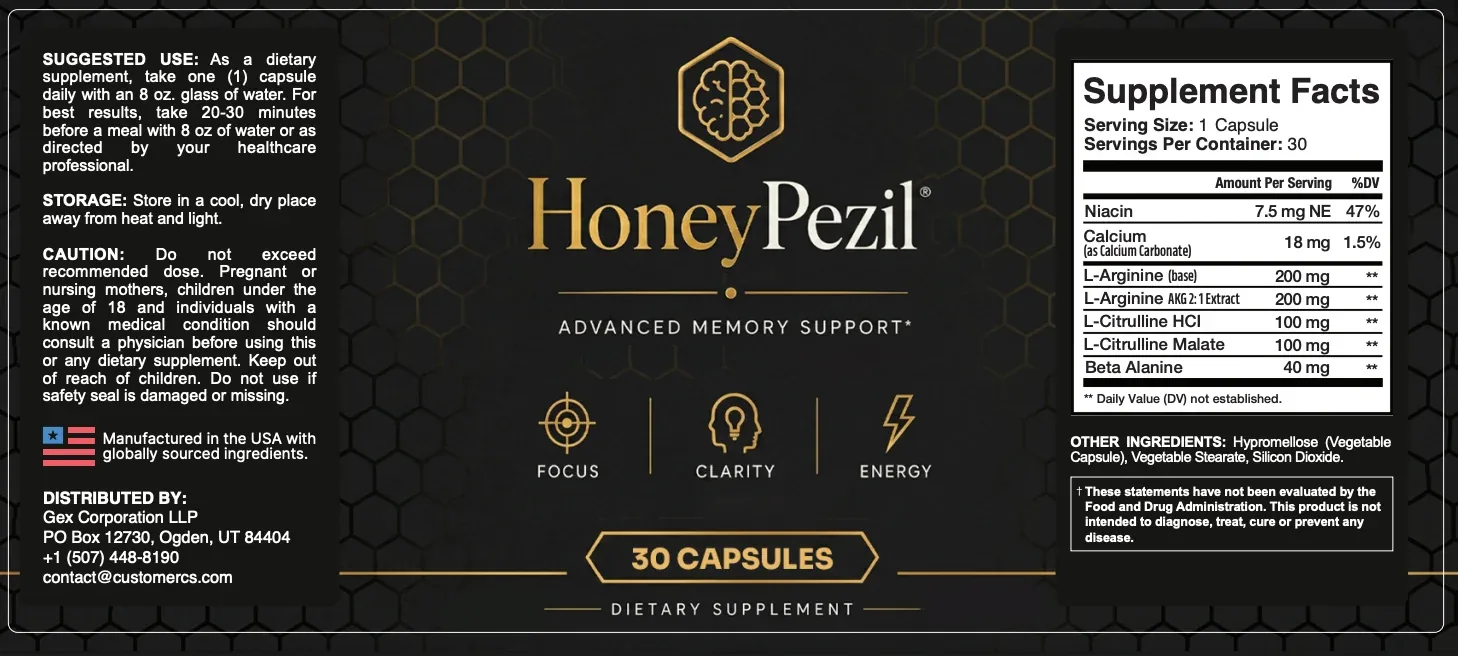
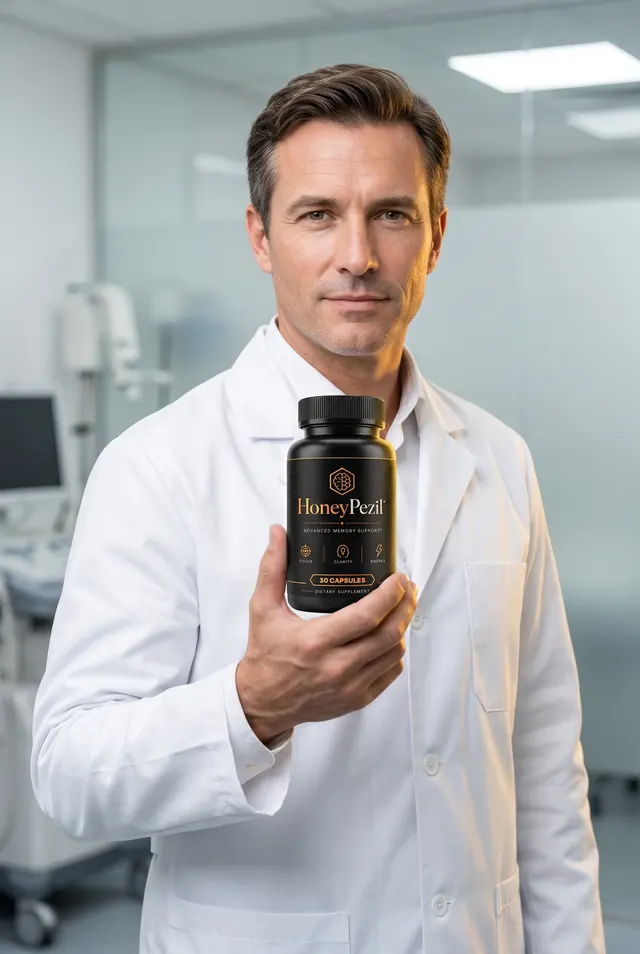
Run this guide’s checks on HoneyPezil’s own panel
Seven ingredients, no proprietary blend, every milligram printed — exactly the kind of label this guide tells you to look for. See whether the doses convince you.