Phosphatidylserine for Memory: What the Evidence Shows
Does Phosphatidylserine Help Memory?
Phosphatidylserine is a membrane phospholipid studied for everyday memory and recall in healthy older adults. At the common dose of 100 mg three times daily (300 mg per day), it supports neuronal membrane fluidity and may help modulate cortisol. The evidence is meaningful for age-related memory support, not for treating any disease.
- Dose: 100 mg three times daily, about 300 mg per day.
- Mechanism: supports membrane fluidity and cortisol balance.
- Best studied in: everyday memory in healthy older adults.

Phosphatidylserine is one of the more quietly credible ingredients in the memory-supplement world. It does not have the viral hype of lion’s mane or the drug-like reputation of huperzine A, but it has something arguably more valuable: a body of human research, a clear typical dose, and a mechanism that makes biological sense. If you have scanned a Supplement Facts panel and wondered whether the phosphatidylserine line is doing real work or just padding the label, this is the honest breakdown of what the evidence supports and where it stops.
What phosphatidylserine actually is
Phosphatidylserine, often abbreviated PS, is a phospholipid — a fat-based molecule that is a structural component of cell membranes. It is not exotic; your body makes it, and it is present in every one of your cells. What makes it interesting for cognition is where it concentrates. PS is especially abundant in the membranes of brain cells, sitting mainly on the inner face of the neuronal membrane. Because the brain is one of the most lipid-rich organs in the body, the quality and flexibility of these membranes matters a great deal for how well neurons function, and PS is a key part of that architecture.
The membrane fluidity role
Neurons are not static. Every signal a brain cell sends or receives depends on proteins embedded in its membrane — receptors, ion channels, transporters — and those proteins only work properly when the membrane around them stays appropriately fluid rather than stiff. Phosphatidylserine contributes to that fluidity. It also participates in the release of neurotransmitters and in the activity of enzymes tied to cell signalling. The plausible, mechanistic story is that adequate PS helps neuronal membranes stay in good working order, which in turn supports the signalling that underlies attention and memory. This is one reason PS is framed as membrane and cellular support rather than a direct stimulant.
The cortisol connection
PS has a second, less obvious angle: stress physiology. Several studies have examined phosphatidylserine’s effect on cortisol, the hormone your body releases under stress. The research suggests PS may help blunt the cortisol response to acute mental or physical stress. Since chronically elevated cortisol is unhelpful for clear thinking and memory consolidation, a modest dampening of an overactive stress response is a reasonable secondary way PS could support day-to-day cognitive comfort. It is worth being measured here: this is supportive, everyday-stress territory, not a treatment for any clinical condition.
What the human evidence shows
Phosphatidylserine is better studied than most supplement ingredients. Human trials, several of them in healthy older adults, have examined PS for aspects of memory, recall and cognitive performance, with a number reporting improvements in name-face recall and general memory measures over weeks to months of daily use. The most consistent picture is one of modest, real support for everyday age-related memory rather than a dramatic transformation. It is important to note that some of the strongest historical studies used PS derived from bovine cortex, whereas modern supplements almost universally use plant-derived (soy or sunflower) PS; the plant-sourced form is what you will actually buy, and it is generally considered a suitable, well-tolerated alternative.
Timing expectations matter here too. Like most membrane-level, cumulative ingredients, phosphatidylserine is not an acute pick-me-up you feel within the hour. The trials that reported memory benefits ran for weeks to months of daily use, so a fair personal trial means taking it consistently for at least six to twelve weeks before drawing any conclusion. Splitting the 300 mg across the day, rather than swallowing it all at once, mirrors how much of the research actually dosed it and can also reduce the chance of the mild stomach upset some people notice. As with any single ingredient, steady consistency does far more work than a large occasional dose.
Phosphatidylserine at a glance
| Feature | Detail |
|---|---|
| What it is | Membrane phospholipid, concentrated in brain cells |
| Typical dose | 100 mg three times daily (300 mg/day) |
| Main roles | Membrane fluidity, neurotransmission support, cortisol modulation |
| Best-studied group | Healthy older adults, everyday memory and recall |
| Source in supplements | Usually plant-derived (soy or sunflower) |
Phosphatidylserine vs bacopa: complementary, not rivals
People often ask which is the “best” memory ingredient, but PS and bacopa monnieri are not really competing. Bacopa is the stronger, better-evidenced performer for actively building memory and recall over an 8-to-12-week window, working on the systems tied to learning. Phosphatidylserine works on a different layer — the structural health of neuronal membranes and the stress-hormone system — and has a particular research base in older adults. That is precisely why thoughtful formulas often include both: they cover different mechanisms and complement each other rather than duplicating a single effect.
Safety and who should be cautious
At the standard 300 mg per day, phosphatidylserine has a good tolerability record in healthy adults. Reported side effects are usually mild — some stomach upset, or difficulty sleeping if a dose is taken late in the evening, which is easily solved by dosing earlier. The genuine caution is for people on blood-thinning medication or with a bleeding disorder, and for anyone pregnant, nursing, or managing a health condition, where a quick conversation with a doctor is the sensible step rather than a formality.
Where the evidence stops
Two honest limits are worth stating. First, PS supports everyday memory in healthy people; it is not a treatment for dementia, Alzheimer’s disease, or any other medical condition, and genuine progressive memory loss needs a clinician, not a supplement. Second, a finished multi-ingredient product is not the same as any single studied dose — check that the label actually delivers a meaningful amount rather than a token sprinkle, and compare it to the 300 mg per day the research used. Used with realistic expectations, PS is one of the more defensible ingredients on a memory-support label.
Medical note: this article is general information, not medical advice. Speak to a healthcare professional before starting any supplement, especially if you are pregnant, nursing, taking blood-thinning medication, or managing a health condition.
Scientific references
- Glade MJ, Smith K — Phosphatidylserine and the human brain, Nutrition (2015)
- Kato-Kataoka A. et al. — Soybean-derived phosphatidylserine improves memory function of the elderly Japanese subjects with memory complaints, J Clin Biochem Nutr (2010)
- PubMed — phosphatidylserine and cortisol response to stress
- NIH NCCIH — Dietary and Herbal Supplements
- NIH Office of Dietary Supplements — ingredient fact sheets
Frequently asked questions
What does phosphatidylserine do for the brain?
Phosphatidylserine is a phospholipid that sits in the membranes of your brain cells, where it helps keep those membranes fluid and supports how neurons signal and communicate. It also plays a role in the systems that manage the stress hormone cortisol. In practical terms it is studied as everyday support for memory, recall and mental sharpness, particularly as we age.
What is the standard phosphatidylserine dosage?
The most commonly studied dose is 100 mg taken three times a day, for a total of 300 mg per day. Much of the research on memory in older adults used this amount over several weeks to months. Some products use lower daily totals, so check the label against the 300 mg figure and follow the manufacturer's directions.
Is phosphatidylserine better than bacopa?
Neither is simply better; they do different jobs. Bacopa is the stronger performer for building memory and recall over 8 to 12 weeks, while phosphatidylserine supports neuronal membranes and cortisol balance and is especially studied in older adults. Many formulas include both because they complement each other rather than compete. The best choice depends on your goal and age.
Are there side effects of phosphatidylserine?
For most healthy adults phosphatidylserine is well tolerated at the usual 300 mg daily dose. The most commonly reported issues are mild, such as stomach upset or trouble sleeping when taken late in the day. If you take blood-thinning medication or have a health condition, talk to your doctor first, since that is where caution genuinely matters.
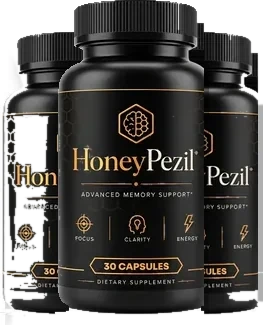
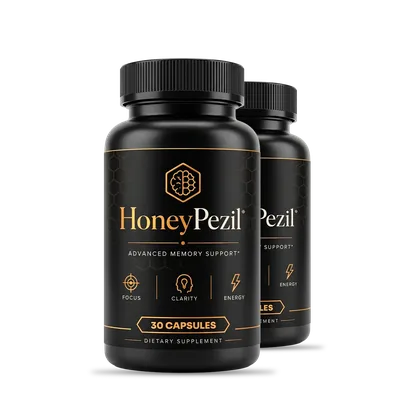
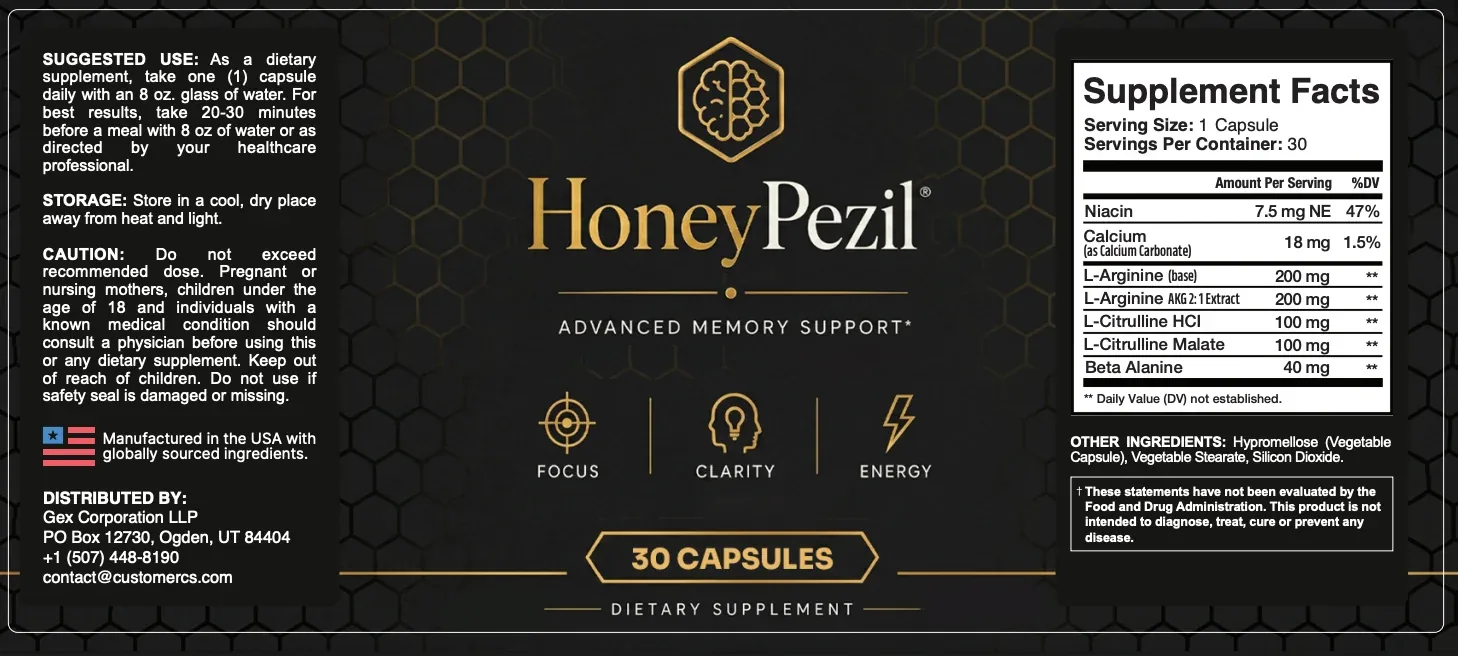
See what HoneyPezil actually prints on its panel
HoneyPezil contains no phosphatidylserine. It is an amino-acid formula built on 400 mg of arginine and 200 mg of citrulline per daily capsule.