Royal Jelly for Brain Health: The Evidence and Limits
Does royal jelly support brain health?
Royal jelly is a protein-rich secretion from nurse bees, and laboratory work has shown that some of its compounds can influence nerve growth signalling, which is why it appears in cognitive formulas. The human evidence is thin: the trials that exist are small, short and inconsistent, so royal jelly is best described as a promising research subject rather than a proven brain ingredient. Anyone allergic to bees, bee stings or pollen should avoid it entirely.
- Quality marker: 10-HDA, a fatty acid unique to royal jelly.
- Evidence strength: weak in humans; mostly cell and animal work.
- Main caution: real allergy risk for people sensitive to bee products.
Bee products occupy a strange spot in the supplement world. They are ancient, they are natural in the most literal sense, and they carry an intuitive appeal that few laboratory-made ingredients can match. They are also, in cognitive terms, among the least well studied things you can buy. This article separates what is genuinely known about royal jelly and propolis from what is inferred, assumed or simply asserted on packaging.
What royal jelly and propolis actually are
Royal jelly is a secretion produced by the hypopharyngeal and mandibular glands of young worker bees. All bee larvae are fed it for the first few days of life, but the larva destined to become a queen is fed it continuously, and that dietary difference is what turns a genetically ordinary larva into a much larger, longer-lived, fertile queen. That single biological fact does more marketing work for royal jelly than any study ever has, and it is worth being clear that a compound which reprograms insect development tells you very little about what it does in an adult human brain.
Compositionally, royal jelly is mostly water, with proteins, sugars, and a distinctive fatty acid fraction. The proteins are known as major royal jelly proteins, and one of them, royalactin, is the molecule most associated with the queen-making effect in bees. Propolis is entirely different in origin. It is a resinous material that bees gather from tree buds, bark and sap, then blend with wax and their own secretions to caulk the hive, waterproof it and keep it microbially clean.
Neither is honey. Honey is nectar that bees have processed and dehydrated; it is overwhelmingly sugar, with small amounts of enzymes, organic acids and polyphenols along for the ride. A honey base in a supplement is doing a job of carrying, sweetening and preserving, and it deserves to be described that way rather than credited with the actions of the named actives it sits alongside.
The marker compounds that define quality
If you want to judge a bee-product supplement rather than admire it, the marker compounds are where to look. For royal jelly, the marker is 10-hydroxy-2-decenoic acid, universally shortened to 10-HDA. It is found nowhere else in nature, which makes it the standard test for whether a product is genuine royal jelly and how concentrated it is. Reputable suppliers state a 10-HDA percentage. Products that state only "royal jelly powder" with no marker figure are unverifiable by you and often by anyone else.
Propolis is trickier because it has no single marker. Its composition depends on which plants grew near the hive. Poplar-type propolis, common across Europe and North America, is characterised by flavonoids such as pinocembrin and galangin along with caffeic acid derivatives. Brazilian green propolis, from a different plant source entirely, is dominated by artepillin C. Red propolis has yet another profile. This means two propolis extracts can share a label and share almost nothing else, which is a genuine problem for interpreting research and for buying sensibly.
Why royal jelly for brain health keeps coming up
The research interest in royal jelly for brain health rests mainly on nerve growth factor signalling. Nerve growth factor is one of a family of neurotrophins, proteins that help neurons survive, grow and maintain their connections. Laboratory studies have found that certain royal jelly constituents, including fatty acids structurally related to 10-HDA, can stimulate neurotrophin-related activity in cultured cells, and some animal work has followed that thread further.
Propolis attracts attention for a different reason: its polyphenols are potent antioxidants and have been studied extensively for effects on inflammatory signalling in cell models. The human work is far scarcer and far narrower than the marketing implies: its most-cited example is a trial of Brazilian green propolis in elderly people living at high altitude, which reported less progression into mild cognitive impairment — one study, one extract, one unusual setting. Because low-grade inflammation and oxidative stress are plausible contributors to age-related cognitive change, the logical leap to brain support is easy to make. It is also, at present, mostly a leap. Cell-culture antioxidant activity is a starting point for research, not a finding about human cognition, and the distance between the two is measured in decades of work that has not yet been done here.
Prefer ingredients with human trials behind them?
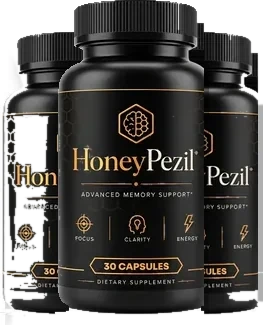
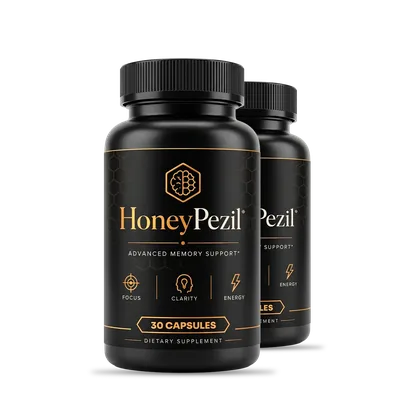
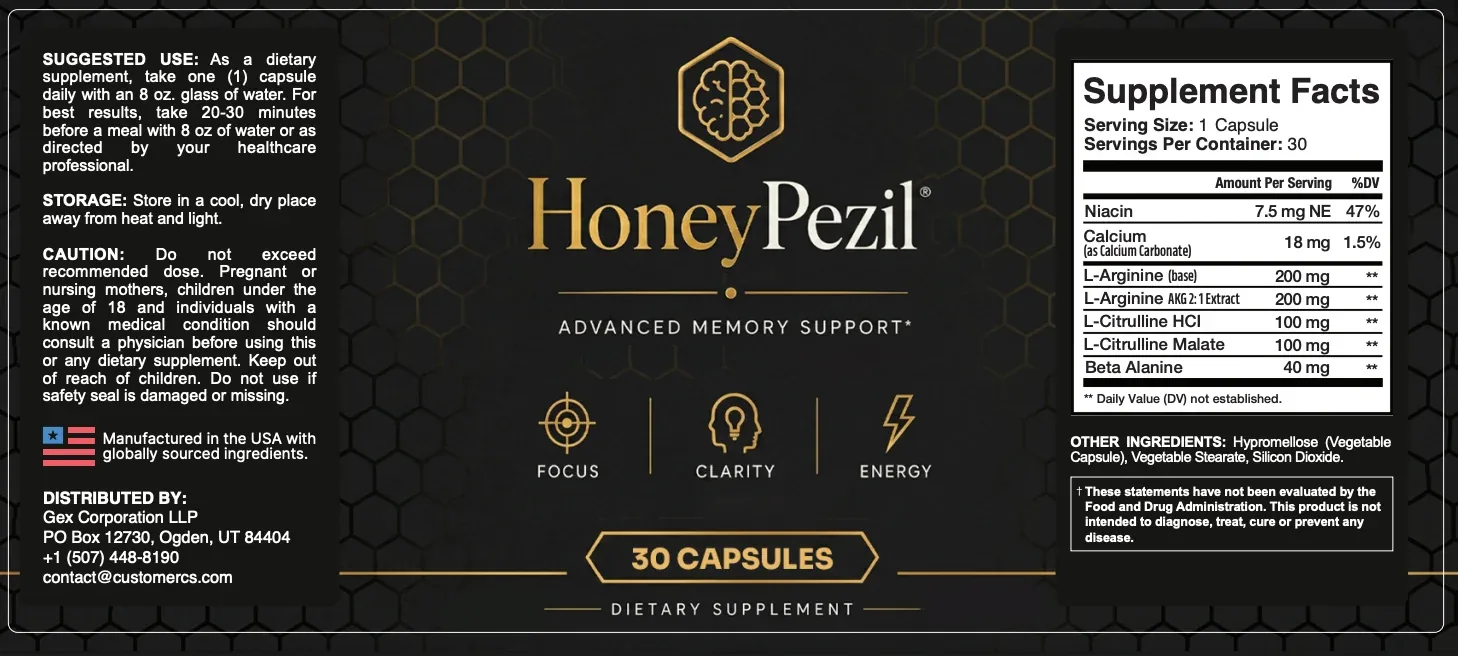
If you are shortlisting the best brain health supplement for memory, weight the ingredients that have been tested in people. HoneyPezil contains no royal jelly, no propolis and — despite the brand name — no honey. Its Supplement Facts panel prints seven ingredients with every amount stated: L-arginine 200 mg, L-arginine AKG 200 mg, L-citrulline HCl 100 mg, L-citrulline malate 100 mg, beta-alanine 40 mg, niacin 7.5 mg NE and calcium 18 mg. That is an amino-acid, nitric-oxide line-up you can check ingredient by ingredient.
See what is in the formulaWhat the human evidence does and does not show
Here is the part that most pages about bee products skip. Human trials of royal jelly for cognition are few in number, small in size and short in duration. Some have been conducted in older adults and have looked at general wellbeing, fatigue or mood measures alongside cognitive tests. The picture that emerges is not a consistent one, and small studies with mixed outcomes are exactly the conditions under which chance findings look convincing.
Propolis is in a similar position for cognition, with the added complication that no two extracts are chemically alike. It has been studied more seriously in other contexts, particularly oral health and topical uses, where the antimicrobial properties are more directly relevant. Extending those findings to memory is not supported by the data.
An ingredient with a fascinating mechanism and no adequate human trials is not an ingredient with weak evidence. It is an ingredient with an open question, and the honest thing to do is say so.
None of this means bee products are useless. It means that if you are choosing between a formula whose cognitive claim rests on royal jelly and one whose claim rests on ingredients tested in randomised human trials, the second is the better-supported purchase. Where a formula includes royal jelly alongside better-evidenced actives, the sensible reading is that the bee product is a supporting or traditional-use ingredient, not the reason the product works.
Bee products compared
| Product | What it is | Key marker | Human cognitive evidence |
|---|---|---|---|
| Honey | Processed, dehydrated nectar | Sugar profile, diastase activity | Very limited; mainly a carrier and sweetener |
| Royal jelly | Gland secretion fed to larvae and the queen | 10-HDA percentage | Weak — few, small, short trials |
| Propolis | Plant resin collected and processed by bees | Varies by plant source; no universal marker | Weak for cognition; better studied elsewhere |
| Bee pollen | Flower pollen packed with nectar and enzymes | None standardised | Very weak; highly variable composition |
| Bee venom | Defensive secretion, not an oral supplement | Melittin content | Not applicable; carries serious allergy risk |
The allergy caution that genuinely matters
Most supplement safety sections are a formality. This one is not. Royal jelly and propolis both carry a documented risk of allergic reaction in susceptible people, and the reactions reported in the literature range from mild to severe, including anaphylaxis. The people most at risk are those with existing allergies to bee stings, pollen or other bee products, and people with asthma appear to be more vulnerable.
Propolis has a second, more common issue: it is a well-recognised contact allergen. Reactions to propolis in lozenges, toothpastes, ointments and lip balms are documented often enough that it appears in standard patch-testing panels for contact dermatitis. Oral use can produce mouth irritation or ulceration in sensitive individuals.
The practical rule is straightforward. If you have any history of reacting to bees or pollen, do not experiment. If you have no such history but want to try a bee product, start with a small amount, take it when someone else is around, and stop immediately at any sign of swelling, hives, wheezing or throat tightness. And as with anything else, if you are pregnant, nursing, or taking medication, ask your doctor first.
How to read a bee-product label
Four checks will tell you almost everything you need to know before you buy brain supplements that lean on hive ingredients. First, look for a marker: a stated 10-HDA percentage for royal jelly, or a named standardised compound for propolis. Second, look for an actual milligram amount rather than a position in a proprietary blend, because a blend total tells you nothing about how much of any single component you are getting.
Third, check what else is in the formula and whether those ingredients carry human trial evidence. A product that pairs a traditional bee ingredient with well-studied actives is a defensible purchase; one that rests its entire cognitive claim on the bee ingredient is not. Fourth, look for third-party testing, because bee products can concentrate environmental residues from the area the hive was in, and the only reassurance on that front is a testing programme somebody publishes.
A note on storage that is easy to miss: fresh royal jelly is unstable and degrades with heat and time, which is why it is usually sold refrigerated or freeze-dried. If you buy a fresh product, keep it cold. If you buy capsules, you are almost certainly buying the freeze-dried form, and the 10-HDA figure on the label is your only real quality signal.
What bee products cannot do
Three limits, stated plainly. First, nothing here treats, prevents or reverses any disease. Royal jelly does not address dementia, and progressive memory change is a reason to see a doctor rather than to try a stronger supplement. Second, the queen-bee story is biology, not evidence: a substance that changes the developmental trajectory of an insect larva has no established equivalent effect in an adult human, and any marketing that implies otherwise is trading on the image rather than the data.
Third, weak evidence is not the same as disproven, but it does mean you should set expectations low and spend your money where the research is stronger. If the mechanism that interests you is nerve growth signalling specifically, the better-studied option in that space is covered in our piece on lion's mane and nerve growth factor, where at least some small human trials exist to argue about. Honest beats hyped, and in this corner of the aisle honest means admitting the trials have not been run yet.
Medical note: this article is general information, not medical advice. Do not take royal jelly or propolis if you are allergic to bees, bee stings, pollen or other bee products. Speak to a healthcare professional before starting any supplement, especially if you have asthma, are pregnant, nursing, or managing a health condition.
Scientific references
- Hattori N. et al. — Royal jelly and its unique fatty acid, 10-hydroxy-trans-2-decenoic acid, promote neurogenesis by neural stem/progenitor cells in vitro, Biomed Res (2007)
- Zhu A. et al. — Brazilian green propolis prevents cognitive decline into mild cognitive impairment in elderly people living at high altitude, J Alzheimers Dis (2018)
- NIH NCCIH — Herbs at a Glance
- NIH Office of Dietary Supplements — ingredient fact sheets
- Mayo Clinic — Food allergy: symptoms and causes
Frequently asked questions
Does royal jelly help memory?
There is not enough good human data to say that it does. Laboratory and animal work has shown that compounds in royal jelly can influence nerve growth pathways, which is why the idea keeps circulating. The human trials that exist are few, small and short, and they do not add up to a reliable answer. It is best treated as an interesting research area rather than an established memory ingredient.
What is 10-HDA in royal jelly?
10-HDA, or 10-hydroxy-2-decenoic acid, is a fatty acid found only in royal jelly, which makes it the standard marker used to check authenticity and quality. A product that states its 10-HDA percentage is telling you something verifiable about what is in the jar. A product that says only royal jelly, with no marker and no amount, is asking you to take its word for it.
What is the difference between royal jelly and propolis?
They come from completely different processes. Royal jelly is a secretion from glands in nurse bees, fed to larvae and to the queen, and it is protein and fatty acid rich. Propolis is a resin the bees collect from tree buds and sap, then mix with wax to seal and protect the hive, and it is rich in polyphenols. Royal jelly is made by the bee; propolis is gathered by it.
Who should avoid royal jelly and propolis?
Anyone with a known allergy to bees, bee stings, pollen or other bee products should avoid both, and this is the one caution here that is genuinely serious rather than routine. People with asthma are also more likely to react. Propolis is a recognised contact allergen and can cause skin and mouth reactions. If you are pregnant, nursing or taking medication, ask your doctor before starting either.
Despite the name, there is no honey in it
HoneyPezil’s panel lists seven ingredients — arginine, arginine AKG, citrulline HCl, citrulline malate, beta-alanine, niacin and calcium — and no bee products.