Stim-Free Nootropics: Focus Without the Jitters
What are stim-free nootropics?
Stim-free nootropics are cognitive-support ingredients that work without caffeine or other stimulants. Citicoline, bacopa, L-theanine, lion's mane and rhodiola support attention and calm through slower, steadier mechanisms. Because they do not spike and crash the nervous system, they suit anxiety-prone people and daily use, and rarely need aggressive cycling.
- No crash: steady baseline instead of a peak-and-dip curve.
- Kinder to sleep: no late-day stimulant to keep you wired.
- Best over weeks: most stim-free effects are cumulative, not instant.

Why some people should skip the stimulants
For a lot of people, caffeine is the default cognitive enhancer, and it works. But if you are anxiety-prone, sensitive to stimulants, or simply tired of the mid-afternoon crash, that default is a poor fit. Caffeine works by blocking adenosine and nudging the body toward its stress response. In sensitive people that shows up as a racing heart, a tight chest, restlessness and the jittery edge that makes it harder, not easier, to concentrate. The alertness is real, but so is the cost, and the cost lands hardest on exactly the people who are already wound up.
Stim-free nootropics take a different route. Instead of pushing the nervous system into a higher gear, they aim to support the underlying machinery of attention, memory and stress tolerance, and then let steady focus emerge from a calmer baseline. That means the experience is quieter. You are unlikely to feel a sharp switch flip on. What you are more likely to notice, over days and weeks, is that focus comes a little easier and mental noise is a little lower. For daily, sustainable use, that trade is usually worth it.
The core stim-free ingredients
A handful of ingredients form the backbone of a well-built caffeine-free stack. None of them is a miracle, and the evidence behind each varies in strength, so it is worth understanding what each one actually does.
L-theanine: calm, focused attention
L-theanine is an amino acid found naturally in tea. On its own it is studied for a relaxed-but-alert state, sometimes described as calm focus, and it is the ingredient most responsible for why a cup of green tea feels smoother than a cup of coffee. It is best known for taking the edge off caffeine when the two are paired, but in a stim-free context it earns its place by promoting a settled mental state without sedation. For the anxiety-prone, that combination of calm and clarity is precisely the point.
Citicoline: a choline building block
Citicoline (CDP-choline) supplies the brain with a form of choline, which the body uses to make acetylcholine, a neurotransmitter central to attention and learning. Rather than stimulating anything, citicoline supports the raw material your brain draws on to focus. It has some of the more encouraging human data among choline sources for attention and mental energy, and it does its job without touching the stimulant pathways, which is exactly why it fits a stim-free approach.

Bacopa monnieri: gradual recall support
Bacopa is one of the better-evidenced herbal nootropics, with several randomised, placebo-controlled trials and a meta-analysis suggesting it can improve aspects of memory and recall in healthy adults. The catch, and the honest headline, is time: the benefit typically emerges after 8 to 12 weeks of daily use, not on day one. That slow, cumulative character makes bacopa a natural stim-free ingredient. It is never going to give you a same-afternoon buzz, and it was never supposed to.
Lion's mane: promising but early
Lion's mane (Hericium erinaceus) is a mushroom studied for its effects on nerve-growth-factor pathways. The mechanism is genuinely interesting and the early human data is encouraging, but the trials are small and short, so it belongs in the promising-supporting-ingredient category rather than the proven one. We flag that gap rather than paper over it. It is calming to no one and stimulating to no one; it simply works on a slow biological timescale.
Rhodiola: stress resilience
Rhodiola rosea is an adaptogen studied mainly for fatigue and stress resilience rather than raw focus. Under mental strain, that resilience can translate into steadier attention because you are less depleted by the stress itself. It is mildly activating for some people, so if you are highly stimulant-sensitive, take it earlier in the day and start low. For most anxiety-prone users it sits comfortably within a stim-free framework.
What the ingredients do, at a glance
| Ingredient | What it supports |
|---|---|
| L-theanine | Calm, focused attention; takes the edge off |
| Citicoline | Choline supply for acetylcholine and mental energy |
| Bacopa monnieri | Recall in healthy adults over 8–12 weeks |
| Lion's mane | Nerve-growth pathways; early human data |
| Rhodiola rosea | Fatigue and stress resilience |
Why stim-free stacks rarely need cycling
One practical advantage of going caffeine-free is that these ingredients generally suit steady daily use. Stimulants build tolerance: the more regularly you use caffeine, the less it does, which is why heavy users often need larger doses for the same effect and why cycling comes up so often. Most stim-free ingredients do not create that same escalating tolerance. Bacopa is actually designed to be taken continuously, because its benefit accrues over weeks. Citicoline and L-theanine are similarly suited to consistent use.
The main exception in the broader nootropic world is a compound like Huperzine A, which is potent enough that it is usually cycled rather than taken indefinitely. That is worth knowing if your stack includes it. But the gentler stim-free botanicals are the opposite: they reward consistency, and skipping days mostly just slows the cumulative benefit. If cycling is a topic you want to dig into properly, see the related guide below.
No crash, and no wrecked sleep
Two of the biggest complaints about stimulant-based focus aids are the crash and the sleep disruption, and stim-free stacks largely sidestep both. There is no adenosine rebound to produce an afternoon slump, so the day tends to feel more level. And because there is no long-acting stimulant lingering in your system, an evening dose is far less likely to keep you staring at the ceiling. Sleep and focus are tightly linked, so protecting your sleep is one of the most underrated ways to protect your daytime attention. Ingredients that do not compromise it start with a real advantage.
Medical note: this article is general information, not medical advice. Speak to a healthcare professional before starting any supplement, especially if you are pregnant, nursing, taking medication, or managing anxiety or another health condition. Individual responses vary, so introduce one thing at a time.
What stim-free nootropics can and cannot do
What they can do. The honest ceiling for this category is a modest, cumulative improvement in the conditions for attention: a calmer baseline, a better-supplied cholinergic system, more stress tolerance on a hard day. L-theanine has the cleanest short-term evidence of the group, bacopa the best long-term evidence for recall, and both effects are real but small. The advantage is that they are sustainable — nothing here builds the tolerance or the rebound that makes a caffeine habit slowly stop working.
What they cannot do. They cannot manufacture alertness on four hours of sleep. Caffeine can, by blocking adenosine, which is exactly why it feels stronger and exactly why the debt comes due later. A stim-free stack has no equivalent trick, so if you are chronically underslept the honest advice is unglamorous: fix the sleep first, because no calm-focus ingredient competes with a full night. They also cannot fix a nutritional or medical cause of fatigue, and none of them treats a disease.
Common mistakes with a caffeine-free stack
- Judging it in a day. Bacopa needs weeks; expecting a same-afternoon signal guarantees disappointment.
- Starting four things at once. If something helps, you will not know which one, and if something upsets you, the same problem applies in reverse.
- Quietly keeping the coffee. That is fine as a plan, but then you are not testing a stim-free stack — you are testing caffeine with additions.
- Buying an under-dosed blend. A capsule that names five ingredients usually contains a fraction of the studied amount of each.
- Treating "no jitters" as "no interactions". Non-stimulant does not mean inert; the same medication checks apply.
Frequently asked questions
What are the best caffeine-free nootropics?
The best-studied caffeine-free options are L-theanine for calm attention, citicoline for supplying the brain a choline building block, bacopa monnieri for gradual recall support, lion's mane for early nerve-growth research, and rhodiola for stress resilience. None of them delivers a stimulant jolt, so they build a steady baseline rather than a sudden peak.
Can I get focus without stimulants?
Yes, though the feel is different. Stim-free ingredients like L-theanine and rhodiola smooth out mental noise and support sustained attention rather than forcing alertness the way caffeine does. The effect is quieter and often slower to build, but for many people it produces more usable, less anxious focus across a full day.
Do stim-free nootropics cause anxiety?
They are far less likely to. Because they do not raise heart rate or trigger the adrenaline-style response that caffeine can, stim-free ingredients rarely provoke the racing, jittery feeling that anxiety-prone people dread. L-theanine in particular is studied for a calming effect. Individual reactions still vary, so start low and observe.
Are stimulant-free nootropics weaker?
Not weaker, just different in character. Stimulants create an obvious short-term lift and an obvious crash. Stim-free ingredients work through slower mechanisms, so the benefit is subtler and cumulative rather than dramatic. For daily, sustainable use, that steadiness is usually an advantage rather than a shortcoming.
Scientific references
- Kongkeaw C. et al. — Meta-analysis of randomized controlled trials on cognitive effects of Bacopa monnieri extract, J Ethnopharmacol (2014)
- NIH Office of Dietary Supplements — Choline fact sheet (citicoline and acetylcholine)
- NIH NCCIH — Rhodiola: What You Need To Know
- NIH NCCIH — Dietary and Herbal Supplements
- PubMed — reviews of L-theanine and lion's mane for cognition
Related reading
A genuinely stim-free daily formula
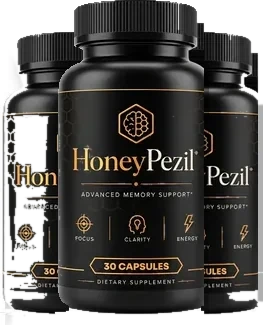
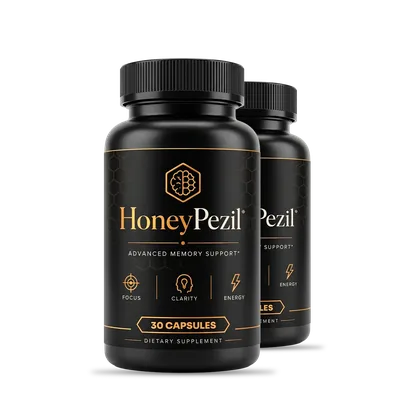
HoneyPezil contains no caffeine and no stimulant botanicals: arginine, citrulline, beta-alanine, niacin and calcium in one capsule, with every amount printed.